Economía Feminista, in English: Feminist Economics, is an Argentine digital media, focused on disclosure and creation of economics information about the gender gap. The media is managed by Mercedes D`Alessandro, Magalí Brosio, Violeta Guitart and Agurtzane Urrutia. == Concept == Economía Femini(s)ta, is a portmanteau of feminista and minita. It attempts to end stereotypes about women. It was created in 2015 and its goal is to be a source of economic data to help to display economic differences by gender, especially in Argentina. == Awards == Economía Feminista was awarded the Lola Mora prize in 2016 for the best digital media by Dirección General de la Mujer, promoted by Buenos Aires city's Legislature.
Vote Compass
Vote Compass is an interactive, online voting advice application developed by political scientists and run during election campaigns. It surveys users about their political views and, based on their responses, calculates the individual alignment of each user with the parties or candidates running in a given election contest. It is operated by a social enterprise called Vox Pop Labs in partnership with locale-specific news organizations, including the Wall Street Journal, Vox Media, the Canadian and Australian Broadcasting Corporations, Television New Zealand, France24, RTL Group, and Grupo Globo. Vote Compass also operates under the trademarks Boussole électorale and Wahl-Navi for French- and German-language iterations, respectively. == Background == Vote Compass was developed by Clifton van der Linden, a professor in the Department of Political Science at McMaster University. It is run by van der Linden along with a team of social and statistical scientists from Vox Pop Labs. Although inspired by European Voting Advice Applications, van der Linden explicitly rejects this terminology, arguing that Vote Compass was "never intended to account for every variable that influences voter choice and its results should not be interpreted as voting advice." == Methodology == Using a Likert scale, users indicate their responses to a series of policy propositions designed to discriminate between candidates' policies on prominent issues relevant to the election. Propositions are crafted in collaboration with political scientists local to each jurisdiction in which Vote Compass is run. Based on a candidate or political party's public disclosures (i.e. party manifestos, policy proposals, official websites, speeches, media releases, statements made in the legislature, etc.) they are calibrated on the same propositions and scales as are users. A series of aggregation algorithms calculate the overall distance between the user and the candidates or parties. There have been claims that Vote Compass surveys have the potential to become push polling, if the survey questions posed are poorly designed.
Comparison of raster graphics editors
Raster graphics editors can be compared by many variables, including availability. == List == == General information == Basic general information about the editor: creator, company, license, etc. == Operating system support == The operating systems on which the editors can run natively, that is, without emulation, virtual machines or compatibility layers. In other words, the software must be specifically coded for the operation system; for example, Adobe Photoshop for Windows running on Linux with Wine does not fit. == Features == == Color spaces == == File support ==
NER model
NER is one of several formulas for accessing live subtitles in television broadcasts and events that are produced using speech recognition. The three letters stand for number, edit error and recognition error. It has been promoted as an alternative to Word error rate (Word Error Rate) which is a more objective measure. The overall score is calculated as follows: Firstly, the number of edit and recognition errors is deducted from the total number of words in the live subtitles. This number is then divided by the total number of words in the live subtitles and finally multiplied by one hundred. N E R v a l u e = N − E − R N ∗ 100 {\displaystyle NERvalue={\frac {N-E-R}{N}}100} . The acronyms stand for the following: N (number) = total number of words in the live subtitles E (Edit error) = edit error R (Recognition error) = recognition error This measurement process has been used for public television broadcasts in European countries like Italy and Switzerland. One major drawback with NER is that it requires a human assessor to rate errors as either: 1 Minor edition or recognition errors 2 Normal edition or recognition errors 3 Serious errors which are then weighted in the assessment process. This is both subjective, time consuming and costly. Also, NER fails to account for words left out subtitles which is something that does not take account of the D/deaf audience who want verbatim subtitles. As a result, NER cannot accurately reflect the audience's experience of subtitles. Another problem is the inconsistency of human evaluation of subtitles, particularly with live subtitles, where there are differing opinions of the importance of subtitle errors. By way of contrast, Word error rate is an objective measure of subtitle errors, since it measures the textual discrepancy between the subtitles and the speech.
Signal-to-noise ratio (imaging)
Signal-to-noise ratio (SNR) is used in imaging to characterize image quality. The sensitivity of a (digital or film) imaging system is typically described in the terms of the signal level that yields a threshold level of SNR. Industry standards define sensitivity in terms of the ISO film speed equivalent, using SNR thresholds (at average scene luminance) of 40:1 for "excellent" image quality and 10:1 for "acceptable" image quality. SNR is sometimes quantified in decibels (dB) of signal power relative to noise power, though in the imaging field the concept of "power" is sometimes taken to be the power of a voltage signal proportional to optical power; so a 20 dB SNR may mean either 10:1 or 100:1 optical power, depending on which definition is in use. == Definition of SNR == Traditionally, SNR is defined to be the ratio of the average signal value μ s i g {\displaystyle \mu _{\mathrm {sig} }} to the standard deviation of the signal σ s i g {\displaystyle \sigma _{\mathrm {sig} }} : S N R = μ s i g σ s i g {\displaystyle \mathrm {SNR} ={\frac {\mu _{\mathrm {sig} }}{\sigma _{\mathrm {sig} }}}} when the signal is an optical intensity, or as the square of this value if the signal and noise are viewed as amplitudes (field quantities).
AppBlock
AppBlock is a software tool for managing screen time that limits access to selected mobile applications and websites. Developed by the Czech studio MobileSoft, it is distributed for Android and iOS devices as well as through browser extensions for Google Chrome, Microsoft Edge and Brave, and as desktop solutions. The application is used primarily to restrict time spent on social media and similar distracting services while working and studying. By 2025, the application reported 700,000 monthly active users, with the domestic Czech market accounting for less than one percent of its total user base and revenue. == History == === Origins === AppBlock was created by the Czech software studio MobileSoft, based in Hradec Králové. The studio was founded in 2012 by Miroslav Novosvětský, who remains the sole owner. The idea for the application arose from the use of browser-based website blockers on desktop computers. AppBlock was conceived as a way to reduce the time spent on mobile devices. === Early releases === In its early phase, AppBlock was available only for phones running on Android. Early versions allowed users to limit access to selected applications and websites during specified periods. From the outset, the application was distributed internationally rather than only within the Czech market, and early coverage reported a multi-million number of downloads worldwide. === Expansion of functionality === Over time, AppBlock has expanded beyond basic application blocking to include additional functions related to limiting procrastination and managing attention. The development of AppBlock accelerated during the COVID-19 pandemic. Following a reduction in external client orders, the studio reallocated resources from contract development to the application. Increased digital content consumption during lockdowns contributed to a rise in the application's usage and revenue. As the application developed, it became the company's product with the largest user base. Novosvětský described an increase in downloads over a twelve-month period, which he linked in part to the company's activities abroad, including participation in events focused on mobile marketing in the United States. These activities were an important factor in the further development of AppBlock. === Internationalization and market expansion === Within roughly the first eight years of the company's existence, MobileSoft became active both in the domestic Czech market and in the United States, supported among other things by participation in the CzechAccelerator program, which is intended to help Czech firms enter foreign markets. In mid-August 2021 the developers launched a version for iOS, which soon began to attract paying users. The expansion to iOS was accompanied by plans for cooperation with the Procrastination.com platform, intended to complement the blocking functions with educational content related to digital media use, sleep and work habits. By 2025, AppBlock was localised into 15 languages, with the largest share of users in the United States, the United Kingdom, Germany, and France, with recent growth in Brazil, and usage extending across several continents. AppBlock has reached more than 10 million installations. In the same period its creators announced plans to refine existing functions and to expand support beyond mobile phones to desktop use, including through support for additional web browsers. == Features == === Supported platforms === AppBlock is distributed as a mobile application for Android and iOS users through Google Play and the Apple App Store. Browser extensions for desktop systems are available for Google Chrome, Microsoft Edge and Brave. === Functionality === AppBlock's core function is to restrict access to selected applications and websites. The mobile application shows a list of installed apps and lets the user select which ones to block. It also includes tools to block specific websites and, on iOS, to block certain phrases entered in the Safari browser. AppBlock can mute notifications from selected applications, so alerts from those apps do not appear while blocking is active. In addition to choosing which apps or content to block, the software also offers an allowlist mode, where only selected applications remain accessible and all others are blocked. Blocking rules are organized into configurable schedules, called profiles. Users can create profiles that define time periods when selected apps and websites are unavailable. Newer versions also allow profiles to be activated automatically based on the time of day, days of the week, the device's location, or connection to specific Wi-Fi networks. The iOS version lets users set limits on how often or how long certain apps can be used before they are blocked, and it can track and restrict screen time for individual apps. In addition to these recurring rules, AppBlock includes a Quick Block feature that temporarily blocks selected apps and websites with a single action, without requiring a separate long-term schedule. Strict Mode is an optional setting that limits the ability to change blocking once it is active. For a specified period, it prevents editing AppBlock's rules and can be configured to stop the app from being uninstalled during that time. While Strict Mode is enabled, users cannot modify or disable the restrictions they have set. Deactivation requires specific verification steps, such as connecting the device to a charger or obtaining approval from a designated contact person. The mobile application also includes statistical and reporting features. In addition to blocking, AppBlock lets users view statistics and data about their use of applications and websites, including screen-time summaries and focus sessions that silence notifications and enforce blocking during defined work or study periods. Browser extensions for desktop environments apply AppBlock's website-blocking functions on Windows and macOS systems through supported web browsers. == Business model == AppBlock uses a freemium revenue model. The basic version of the application is available free of charge and allows blocking of up to three applications at the same time. The premium version removes this limit and adds further configuration options. In 2020, the application shifted from a one-time payment structure to a subscription model. By 2021, AppBlock had more than seven thousand paying users and annual revenue of about four million Czech crowns. By 2025, annual revenue reached approximately 4 million US dollars (80 million CZK) before taxes and platform fees, with roughly 20 percent of active users subscribing to the paid version. == Usage == AppBlock limits access to selected applications and websites in order to reduce smartphone overuse and digital distraction. It is used to block social media, games and other services considered addictive, with the aim of reducing frequent checking of mobile devices and creating time intervals in which these services are unavailable. Reported use cases of AppBlock cover work, students, parents, ADHD, mental health, well-being and business. The application is used both by individual users and within workplace initiatives in which employees install it to reduce digital distractions during working hours.
Biorobotics
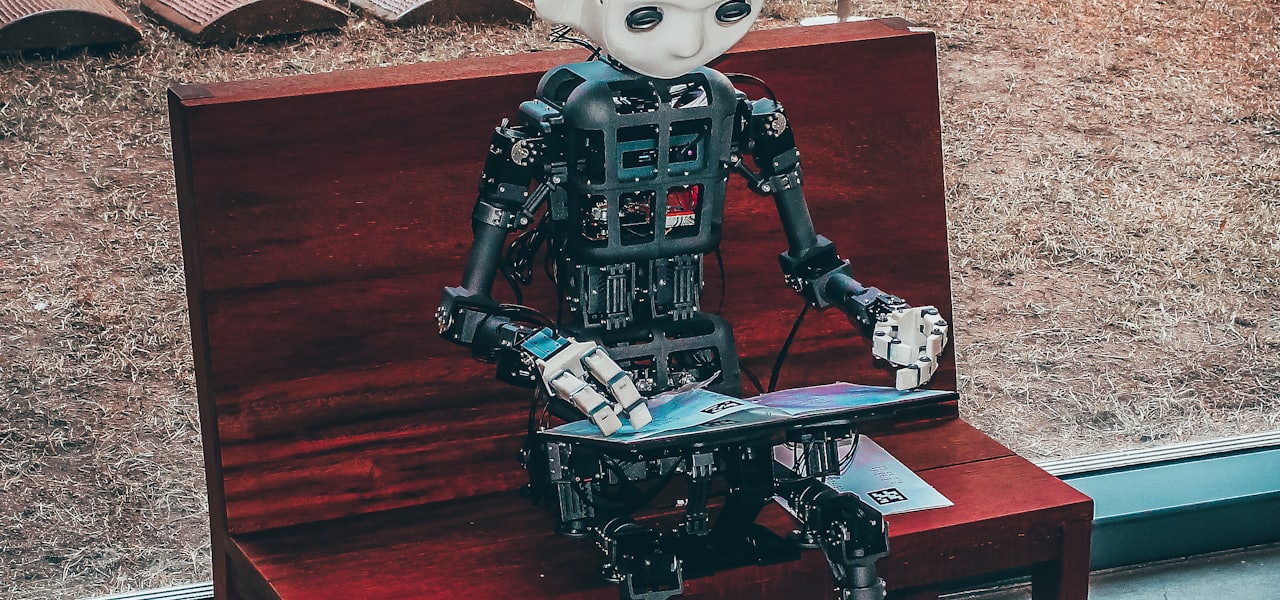
Biorobotics is an interdisciplinary science that combines the fields of biomedical engineering, cybernetics, and robotics to develop new technologies that integrate biology with mechanical systems to develop more efficient communication, alter genetic information, and create machines that imitate biological systems. == Cybernetics == Cybernetics focuses on the communication and system of living organisms and machines that can be applied and combined with multiple fields of study such as biology, mathematics, computer science, engineering, and much more. This discipline falls under the branch of biorobotics because of its combined field of study between biological bodies and mechanical systems. Studying these two systems allows for advanced analysis on the functions and processes of each system as well as the interactions between them. === History === Cybernetic theory is a concept that has existed for centuries, dating back to the era of Plato where he applied the term to refer to the "governance of people". The term cybernetique is seen in the mid-1800s used by physicist André-Marie Ampère. The term cybernetics was popularized in the late 1940s to refer to a discipline that touched on, but was separate, from established disciplines, such as electrical engineering, mathematics, and biology. === Science === Cybernetics is often misunderstood because of the breadth of disciplines it covers. In the early 20th century, it was coined as an interdisciplinary field of study that combines biology, science, network theory, and engineering. Today, it covers all scientific fields with system related processes. The goal of cybernetics is to analyze systems and processes of any system or systems in an attempt to make them more efficient and effective. === Applications === Cybernetics is used as an umbrella term so applications extend to all systems related scientific fields such as biology, mathematics, computer science, engineering, management, psychology, sociology, art, and more. Cybernetics is used amongst several fields to discover principles of systems, adaptation of organisms, information analysis and much more. == Genetic engineering == Genetic engineering is a field that uses advances in technology to modify biological organisms. Through different methods, scientists are able to alter the genetic material of microorganisms, plants and animals to provide them with desirable traits. For example, making plants grow bigger, better, and faster. Genetic engineering is included in biorobotics because it uses new technologies to alter biology and change an organism's DNA for their and society's benefit. === History === Although humans have modified genetic material of animals and plants through artificial selection for millennia (such as the genetic mutations that developed teosinte into corn and wolves into dogs), genetic engineering refers to the deliberate alteration or insertion of specific genes to an organism's DNA. The first successful case of genetic engineering occurred in 1973 when Herbert Boyer and Stanley Cohen were able to transfer a gene with antibiotic resistance to a bacterium. === Science === There are three main techniques used in genetic engineering: The plasmid method, the vector method and the biolistic method. ==== Plasmid method ==== This technique is used mainly for microorganisms such as bacteria. Through this method, DNA molecules called plasmids are extracted from bacteria and placed in a lab where restriction enzymes break them down. As the enzymes do this, some develop a rough edge that resembles that of a staircase which is considered 'sticky' and capable of reconnecting. These 'sticky' molecules are inserted into another bacteria where they will connect to the DNA rings with the altered genetic material. ==== Vector method ==== The vector method is considered a more precise technique than the plasmid method as it involves the transfer of a specific gene instead of a whole sequence. In the vector method, a specific gene from a DNA strand is isolated through restriction enzymes in a laboratory and is inserted into a vector. Once the vector accepts the genetic code, it is inserted into the host cell where the DNA will be transferred. ==== Biolistic method ==== The biolistic method is typically used to alter the genetic material of plants. This method embeds the desired DNA with a metallic particle such as gold or tungsten in a high speed gun. The particle is then bombarded into the plant. Due to the high velocities and the vacuum generated during bombardment, the particle is able to penetrate the cell wall and inserts the new DNA into the cell. === Applications === Genetic engineering has many uses in the fields of medicine, research and agriculture. In the medical field, genetically modified bacteria are used to produce drugs such as insulin, human growth hormones and vaccines. In research, scientists genetically modify organisms to observe physical and behavioral changes to understand the function of specific genes. In agriculture, genetic engineering is extremely important as it is used by farmers to grow crops that are resistant to herbicides and to insects such as BTCorn. == Bionics == Bionics is a medical engineering field and a branch of biorobotics consisting of electrical and mechanical systems that imitate biological systems, such as prosthetics and hearing aids. It's a portmanteau that combines biology and electronics. === History === The history of bionics goes as far back in time as ancient Egypt. A prosthetic toe made out of wood and leather was found on the foot of a mummy. The time period of the mummy corpse was estimated to be from around the fifteenth century B.C. Bionics can also be witnessed in ancient Greece and Rome. Prosthetic legs and arms were made for amputee soldiers. In the early 16th century, a French military surgeon by the name of Ambroise Pare became a pioneer in the field of bionics. He was known for making various types of upper and lower prosthetics. One of his most famous prosthetics, Le Petit Lorrain, was a mechanical hand operated by catches and springs. During the early 19th century, Alessandro Volta further progressed bionics. He set the foundation for the creation of hearing aids with his experiments. He found that electrical stimulation could restore hearing by inserting an electrical implant to the saccular nerve of a patient's ear. In 1945, the National Academy of Sciences created the Artificial Limb Program, which focused on improving prosthetics since there were a large number of World War II amputee soldiers. Since this creation, prosthetic materials, computer design methods, and surgical procedures have improved, creating modern-day bionics. === Science === ==== Prosthetics ==== The important components that make up modern-day prosthetics are the pylon, the socket, and the suspension system. The pylon is the internal frame of the prosthetic that is made up of metal rods or carbon-fiber composites. The socket is the part of the prosthetic that connects the prosthetic to the person's missing limb. The socket consists of a soft liner that makes the fit comfortable, but also snug enough to stay on the limb. The suspension system is important in keeping the prosthetic on the limb. The suspension system is usually a harness system made up of straps, belts or sleeves that are used to keep the limb attached. The operation of a prosthetic could be designed in various ways. The prosthetic could be body-powered, externally-powered, or myoelectrically powered. Body-powered prosthetics consist of cables attached to a strap or harness, which is placed on the person's functional shoulder, allowing the person to manipulate and control the prosthetic as he or she deems fit. Externally-powered prosthetics consist of motors to power the prosthetic and buttons and switches to control the prosthetic. Myoelectrically powered prosthetics are new, advanced forms of prosthetics where electrodes are placed on the muscles above the limb. The electrodes will detect the muscle contractions and send electrical signals to the prosthetic to move the prosthetic. The downside to this type of prosthetic is that if the sensors are not placed correctly on the limb then the electrical impulses will fail to move the prosthetic. TrueLimb is a specific brand of prosthetics that uses myoelectrical sensors which enable a person to have control of their bionic limb. ==== Hearing aids ==== Four major components make up the hearing aid: the microphone, the amplifier, the receiver, and the battery. The microphone takes in outside sound, turns that sound to electrical signals, and sends those signals to the amplifier. The amplifier increases the sound and sends that sound to the receiver. The receiver changes the electrical signal back into sound and sends the sound into the ear. Hair cells in the ear will sense the vibrations from the sound, convert the vibrations into nerve signals, and send it to the brain so